
It seems that in most cultures grandma has a recipe for cabbage. Sauerkraut and kim chi are two of my favorite ways to use up and give some character to cabbage. Whether you are a fan of sour and bold sauerkraut, or you are a fan of the heat of a properly made and complex kim chi, cabbage can be the key condiment in your pantry arsenal.
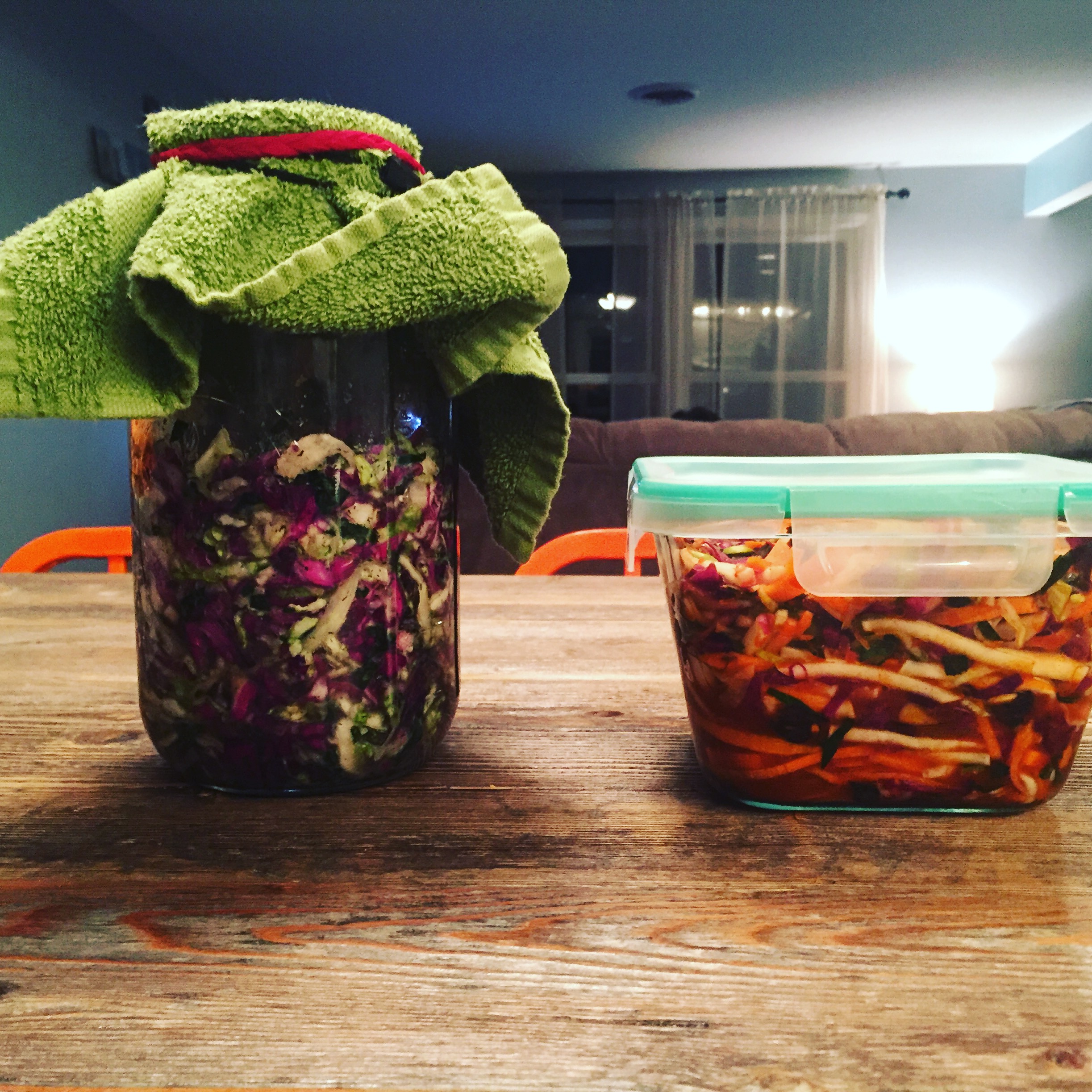
The more that we learn and play in the culinary world the more benefits seem to come to the foreground. Cabbage in its different fermented states is not only absolutely delicious but is being credited with many probiotic benefits. I don’t know the science behind it, but I’ll admit I do feel better eating these raw yet developed foods.
These recipes are inspirations at best and should be viewed as simply a starting point. As these recipes are peasant dishes created out of necessity, often times other ingredients were used. I followed suit and used what I had available around the house.
Guidelines :
- Work clean – this is a chemical reaction that is about to begin and it does not need help from other impeding chemicals or bacteria.
- Don’t use plastic to store your product. I don’t have facts to back this up, but I have seen kim chi stain even food grade plastic. If it is bleaching into the plastic, maybe something is bleaching into the kim chi.
- And for the love of God, if you mix the kim chi by hand wash your hands very well after mixing to avoid any awkward and internet worthy incidents. Peppers to the eyes or any sensitive regions may be entertaining to watch, but not to deal with.
- For both of these recipes, you can use a weight to keep the product submerged. I prefer to check the product daily and press the cabbage down and even stir if I believe it’s necessary.
- For both recipes if the cabbage is not fully submerged in the liquid after 2-3 days, add some extra water.
Rainbow Sauerkraut
Ingredients
1#Green Cabbage – Sliced Thin
1#Red Cabbage – Sliced Thin
1 ½ T Kosher Salt
1 T Garlic Powder
1 T Dry Dill
1 T Caraway Seed
Procedure
- Place all ingredients into a bowl and squeeze and Squish everything like it’s your job. It sounds oversimplified, but it is what you need to do, for about 8 minutes or so. At first it will seem like the cabbage will not give in, but soon enough it will begin to wilt and except its inevitable and beautiful fate.
- Pour the cabbage and all the drippings into a mason jar or similar container. Cover with a cloth and use elastic or twine to ensure the close stays on. This cloth is meant to keep out particles, not necessarily impede airflow.
- After 5-7 days or when the desired sourness has been reached, put a tight sealing lid on the container and store in the fridge.
This is a constantly evolving product and I therefore do not have a specific fridge shelf-life, however certainly try to keep the kraut submerged in the liquid and avoid mold.
Odds and Ends Kim Chi
Ingredients
½# Red Cabbage – Sliced thin
½#Green Cabbage – Sliced thin
3 Brocolli Green Leaves – Sliced thin
¼ Cup Salt
6 Broccoli Green Stems –sliced thin on a bias
1 Carrot – Cut in matchsticks
1 Turnip – Cut in matchsticks
Paste ingredients
1 tsp Sugar
4 Garlic Cloves – Grated
1 tsp ginger grated
3 T Sriracha seasoning
2.5 T Oyster Sauce
2 T Water
Procedure
- place cabbage and broccoli greens in a bowl with salt and begin to massage the mixture aggressively, like a disgruntled masseuse. When the cabbage begins to soften slightly, cover the mixture with water. Use a plate to weigh down the mixture so that it stays submerged. Leave submerged for 2 hours
- Rinse the cabbage mixture and allow it to sit in a colander to drip dry for about 15 minutes and return to the bowl.
- Mix all ingredients for the paste
- Add extra vegetables to the cabbage and massage all of the ingredients with the paste. Mix everything very thoroughly.
- Pack the Cabbage Mixture into a jar or container and press down firmly so that the liquid covers all of the vegetables. Place a lid or cover on the jar. Leave the jar out at room temperature.
- Press down the ingredients daily to ensure that everything stays submerged and so that gas that is formed during fermentation is allowed to escape.
- Taste daily after day 3 or so and refrigerate once the kim chi has acquired the taste that you prefer. This kim chi is not cooked to can and therefore is a “living” food and will continue to evolve and gain complexity of flavor.
if the kim chi or kraut are ever to strong for your liking, find a way to use them up as flavorings for sauces, soups, or stocks.